Nadeem Shahzad Fida Triplem VIP
 Dubai, UAE · From Khawrai, Pakistan

Nadeem
Shahzad Fida

My life has moved through numbers, classrooms, operations, words, photographs and chessboards, yet beneath those different forms I have always been following the same quiet instinct: to look closely, understand what is hidden beneath complexity, and shape it into something clearer. Triplem VIP is where many of those paths finally meet.

Founder of Triplem VIP Based in Dubai
Builder Author FIDE-rated Chess Player Photographer UAE Drone Pilot Community Contributor
A note from the founder

I have never felt that a life should be confined to one title. Every chapter has been a teacher in a different guise. The classroom taught me to make difficult things understandable; industry taught me reverence for detail; accounts showed me how a small number can carry a large consequence; operations taught me to see the whole before judging the part. Chess gave me patience, photography taught me to notice what silence reveals, and writing taught me that the deepest questions are rarely answered in haste. Triplem VIP grew where all of those roads quietly met.

Nadeem Shahzad Fida

A life shaped by systems, observation, questions and the quiet urge to turn disorder into meaning.

My work moves between business, technology and creative practice, but beneath the visible differences runs one continuous thread: understand what is truly happening, remove what obscures it, and leave behind something clearer, calmer and more useful than I found it.

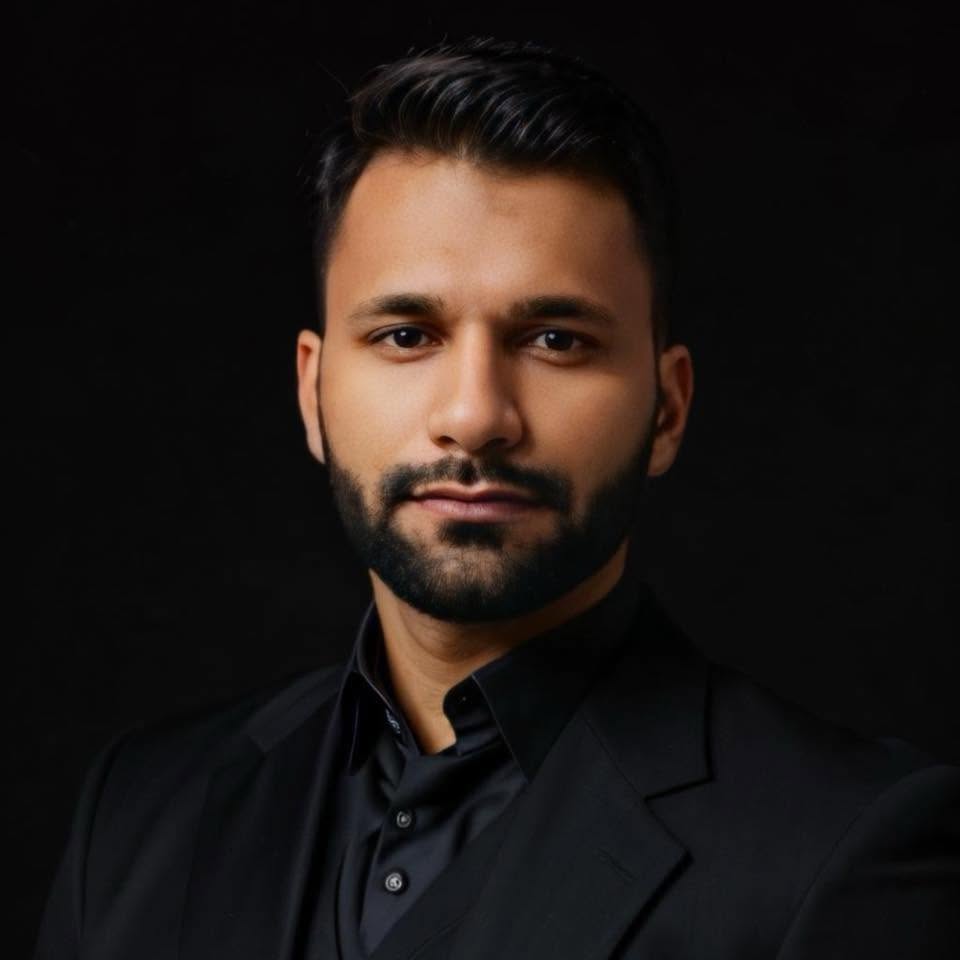
I am Nadeem Shahzad Fida, from Khawrai, Pakistan, now living and working in Dubai, United Arab Emirates. By profession I serve as an Operations Manager at Premium Car Rentals DMCC; beyond that formal description, I am the founder of Triplem VIP, an author, a FIDE-rated chess player, a photographer, a licensed UAE drone pilot and, perhaps most simply, a person who is rarely able to walk past a genuine problem without wondering whether it can be made easier. Geography changed, professions changed and responsibilities grew, but that habit of inquiry travelled with me.

I do not experience these as separate identities. They are different windows opening toward the same landscape. Operations is the study of movement; accounting is the memory of consequence; software is the art of turning rules into something a human being can actually use; chess is choice under uncertainty; photography is the discipline of seeing; and writing is the attempt to give passing thought a form that can outlive the moment. In each of them I return to the same inward instruction: look closely, think clearly, and build deliberately.

My professional path was never drawn as a straight line, and with time I came to value that. I began in classrooms teaching Mathematics and Physics, later taught Accounting and Business Mathematics, then moved into industrial data coordination in manufacturing. Dubai brought another chapter through accounts, followed eventually by operations leadership. What seemed, from the outside, like changes of direction were quietly accumulating into one education. By the time I began building financial software, money management was no longer an abstract programming problem to me. I had already watched records become decisions, delays become consequences, reconciliations restore order, and small operational details shape the experience of real people.

That lived experience became an important part of the story behind Triplem VIP. I did not want to build another screen full of numbers that asked the user to become fluent in the machinery before gaining clarity. I wanted something closer to a private command centre for everyday financial life, a place where wallets, loans, inventory, assets, receipts, invoices and obligations could be gathered without making the person feel smaller than the system. For me, good tools should do what a clear mind does: gather scattered things, reveal their relationship and return a sense of direction.

There is also a quieter part of my life that no business title can contain. I value the hush of a chess position before the next move, the brief stillness before pressing a camera shutter, the solitude in which a paragraph finally finds its true sentence, and the moment when an untidy idea becomes an interface that suddenly feels inevitable. Those moments remind me that useful creation is not always born from speed. Often it begins in attention, in silence, and in the willingness to remain with a question until its unnecessary layers fall away.

The work changed, but the deeper apprenticeship remained the same.

Rather than reducing the journey to job titles, this is the story of what each station taught me, what it quietly left behind, and how those lessons eventually found a common home inside Triplem VIP.

I have worked in classrooms, beside the data currents of a manufacturing floor, among ledgers and transactions, and inside the daily motion of operations. Outwardly, these worlds have little in common. Inwardly, they ask for much the same discipline: information must arrive faithfully, people must understand what comes next, small errors must be noticed before they grow into expensive truths, and systems must remain simple enough to survive the imperfect rhythm of real life. Over time I began to see that every workplace has both a visible machinery and an invisible order beneath it; my interest has always been in understanding both.

01
The classroom

Teaching taught me that clarity is not decoration; it is a responsibility.

In 2015 and 2016, I taught Mathematics and Physics at Roshan Education Center in Jehangira. During 2016 and 2017, I also taught Mathematics, Accounting and Business Mathematics at Ideal Academy in Baldia Town, Karachi. A classroom teaches humility very quickly. A formula that seems obvious in your own mind can remain completely dark to someone else until you discover the right sequence, the right example and sometimes the right silence between two explanations. Numerical subjects are especially honest in that way: vague teaching eventually reveals itself in the learner's confusion.

That habit never really left. When I design a screen today, a part of me still stands in front of a classroom. I ask what the person needs to understand first, what can wait, which word creates needless fog, and which number carries the actual meaning. Good software, like good teaching, should not display its intelligence by making the other person feel inadequate. Its purpose is to illuminate the next step and then quietly get out of the way.

02
The factory floor

Industry taught me to respect data before asking it to speak.

From 2016 to 2018 I worked full time as a Data Coordinator in the Spinning Department at Gatron Industries Limited in Hub, Balochistan. Manufacturing gave numbers a physical weight. A figure on a screen was no longer merely a cell in a spreadsheet; behind it could be output, movement, material, timing and the labour of people whose next decision depended on that record being right. Data stopped feeling abstract. It became a form of trust passed from one hand to another.

That environment deepened my respect for structure, consistency and traceability. It also taught me a lesson that later became central to my software work: information has no real value merely because it has been stored. A system may collect thousands of entries and still leave its users in darkness if those entries cannot be understood, compared, retrieved and trusted at the moment of need. Knowledge, like light, matters because it reveals.

03
The books and ledgers

Accounts taught me how far one small number can travel through a human story.

When I joined Premium Car Rentals DMCC in Dubai in 2018, my earlier role was on the accounts side of the business as an Accounts Executive. Living close to transactions, balances, reconciliations, receivables, payables and customer records changed the way I understood financial information. A missing entry is almost never only a missing entry. It can distort a balance, delay a decision, complicate a conversation and force someone later to reconstruct a past that should already have been preserved accurately.

This is where much of the human logic behind Triplem VIP comes from. Financial control should not depend on memory, scattered spreadsheets or the uneasy feeling that a balance no longer agrees for reasons nobody can immediately explain. A good record should carry its own history. It should tell the story of what happened without demanding that the user become an archaeologist of yesterday.

04
The operational view

Operations taught me to stop mistaking one visible part for the whole.

I later progressed within Premium Car Rentals DMCC into my current role as Operations Manager. Operations changes the scale of attention. The question is no longer only whether one transaction is correct, but whether the wider movement is healthy: how people, vehicles, customer needs, records, finance and daily decisions affect one another, where pressure is accumulating, and how a small delay in one corner can become a much larger problem somewhere else. It teaches you to look beyond the visible symptom toward the system that produced it.

That wider view now shapes the way I build products. I am interested not only in modules, but in the relationships between them. An expense belongs to a wallet. An asset gathers a history. Inventory changes profit. A loan reshapes obligations. A report should arise from the same underlying truth instead of becoming a separate version of reality. Triplem VIP is, in many ways, my attempt to give personal and small-business finance an operational view, so that the parts can be understood without losing sight of the whole.

Visit Premium Car Rentals DMCC
Where the paths meet

Teaching gave me the discipline of explanation. Manufacturing gave me respect for data. Accounts gave me intimacy with financial detail. Operations taught me to see relationships instead of isolated events. None of those chapters arrived announcing what they were preparing me for. Only later did their meaning become visible, when Triplem VIP became the place where those scattered lessons could take one practical form.

Triplem VIP began with a simple truth: financial disorder usually arrives quietly, long before the numbers become large.

Triplem VIP is my flagship private accounting and finance platform. It grew not from a theory of what financial software should be, but from years spent close to accounts, records and operations, where I repeatedly saw the same thing: people do not need more financial machinery; they need a clearer relationship with the information they already carry.

Everyday finance fragments almost without being noticed. Cash sits in one place, bank and card spending in another. Loans survive in messages and memory. Inventory lives in a sheet. Asset expenses disappear into receipts. Installments keep their own calendar. Each piece may be understandable by itself, yet the complete financial position remains hidden behind the separation. Triplem VIP exists to gather those scattered fragments into one calm, searchable workspace, so the user can see not only the entries, but the shape they form together.

The platform connects expense wallets, loans, inventory, invoices, receipts, asset management, installments, notes, multi-currency records, reports and browser-controlled Bitcoin tools. Their presence is not an attempt to make a longer feature list. They are there because real financial life does not arrive in neatly separated boxes. These things already affect one another outside the screen; the software should be wise enough to preserve those relationships inside it.

I care deeply about the user's sense of control. A person should be able to look backward and understand what happened without rebuilding the past from memory. Records should be exportable, reports readable, search genuinely useful and sensitive areas treated with restraint. With Bitcoin tools, for example, private-key handling remains on the client side rather than being treated as ordinary server data. Privacy, to me, is not an ornamental promise; it is part of respecting the boundary between what a system may know and what should remain with the person.

Triplem VIP also reflects a broader design belief of mine: power does not need to announce itself through complexity. The interface should carry the burden so the person can carry the understanding. That is why the landing experience, dashboard, reports and individual modules are shaped around clarity, visual hierarchy, responsive access and practical speed. The best interface, like the best explanation, should leave the user with more certainty than noise.

See the whole positionBalances, obligations, inventory, assets and activity should make sense together.
Keep private things privatePrivacy is a product decision, not a decorative statement in a footer.
Hide unnecessary complexityA serious financial tool can still feel approachable and human.
Triplem VIP logo
TRIPLEM VIPPrivate Accounting & Finance Workspace
THE IDEA IN ONE SENTENCE

One private place where scattered financial records remain connected enough for the larger truth of your position to become visible.

Expense WalletsCash, bank, card and custom money spaces
LoansTrack money given, taken, returned and received
InventoryStock, sales, balances and profit visibility
Invoices & ReceiptsProfessional records made to be kept and shared
AssetsCost, income, maintenance and performance history
BitcoinClient-side key control with wallet statements
Multi-currencyDesigned for financial life across currencies
Reports & ExportsStructured PDF, CSV and printable records
What makes it personal Triplem VIP was never conceived as a portfolio demonstration. It began as software I wanted to trust in my own daily life, and only afterward grew into something for other people and businesses living with the same scattered records, obligations and unanswered financial questions.

Sixty-four squares, where silence becomes calculation and every choice leaves a trace.

Chess is one of the places where I return to thought without noise. The board rewards patience, exposes self-deception and teaches, move by move, that consequence often begins long before it becomes visible.
Nadeem Shahzad Fida
FIDE ID 7807252 · Pakistan Federation
FIDE Rated Player · ID 7807252

Chess is one of the few places where ambiguity offers no refuge. The position is there, the clock is moving, and sooner or later you must choose. I value that uncompromising honesty. A beautiful move may still be false; a quiet move may appear almost invisible and yet alter the entire future of the position. Over time the board became less a pastime and more a private chamber of attention, where patience, ego, fear, calculation and consequence reveal themselves without much ceremony.

I am registered with FIDE under the Pakistan federation, with FIDE ID 7807252. My public ratings include 1708 in Blitz and 1532 in Rapid. I value those numbers, but chess matters to me for something quieter than rating. It teaches me to examine a position without flattering myself, to accept an error without inventing excuses, and to return after defeat with a better question. In that sense, every serious game contains a small lesson in self-knowledge.

1708
Blitz Rating
1532
Rapid Rating
7807252
FIDE ID
🇵🇰
Pakistan Fed.

Its influence reaches my working life almost without permission. Operations often feels positional: a problem visible now may have been created several moves earlier. Product design behaves the same way. Adding something is easy; understanding what that addition weakens elsewhere requires deeper attention. Chess trained me to search for those second-order effects and to distrust hurried certainty. It also taught me that patience is not inactivity; it is disciplined preparation for the moment when action becomes necessary.

Calculation: Seeing multiple moves ahead, on the board and in business, before committing to a line.
Positional Thinking: Small, consistent advantages compound over time. No single move wins a game; patterns do.
Time Pressure: Every second on the clock is finite. Decision-making under pressure is a skill, not a gift.
Analysis: After every game, win or lose, the position is reviewed. Failure is only permanent if you refuse to study it.

Photography is how I learn to notice the things that pass quietly before the world names them important.

I do not call myself a professional photographer. I photograph because a frame can make the familiar strange again, and because looking carefully, from the ground or from the air, often reveals a second world hiding inside the first.

I came to photography without any plan to turn it into a profession. At first there was only the pleasure of carrying a camera and the strange discipline of looking long enough for an ordinary scene to surrender something extraordinary. A camera appears to record what is in front of it, yet it quietly asks a harder question: among everything visible, what deserves to remain? The answer is rarely the loudest object in the frame.

That question slowly turned photography into more than a casual interest. Every photograph is a small act of testimony: this moment existed, this angle mattered, this light passed through the world only once in precisely this way. There is something almost contemplative in that awareness. The shutter does not stop time, but it teaches you to honour its passing. I am drawn to images that keep a quiet truth after the novelty of the scene has faded.

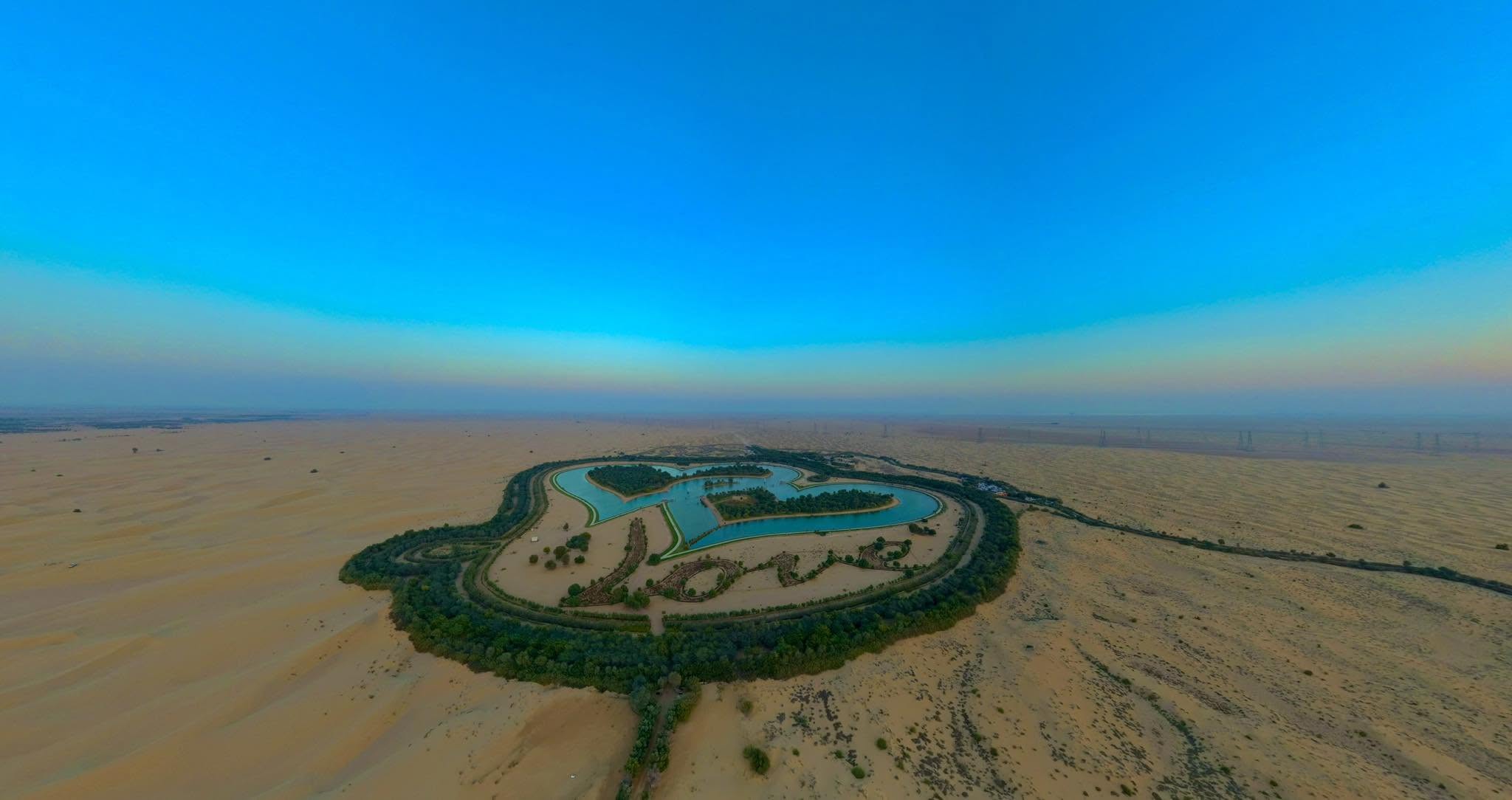
My subjects move from landscapes in Pakistan and the UAE to architecture, streets, nature and the quiet geometry hidden inside ordinary life. I also hold UAE drone pilot certification, which gave me a different kind of vision: familiar roads, coastlines and structures become almost abstract when seen from above, as if distance briefly removes their names and leaves only pattern, proportion and light. One of my photographs, Turquoise Boundary, was selected for America's Favorite Photos and progressed to the Quarter Finals. The recognition mattered to me precisely because photography had begun without professional ambition, simply as an act of seeing.

Photography has also changed the way I design interfaces. Framing is not only the art of inclusion; it is the courage to leave something outside. A crowded screen and a crowded photograph often fail for the same reason: everything is asking to be seen, so nothing is truly seen. Clarity is not emptiness. It is the discipline of deciding what deserves attention, and the restraint to let the rest become quiet.

UAE Drone Pilot CertificationLicensed for aerial capture and drone operation in the UAE.
America's Favorite PhotosTurquoise Boundary reached the Quarter Finals in the photography competition.
Public Photography ArchivePhotography under the n_s_fida identity has been publicly visible on Flickr since 2015.
Street & Documentary
Capturing genuine human moments without interference or staging.
Landscape & Nature
Pakistan's mountains, deserts, and the arid grandeur of the UAE.
Architecture
Lines, symmetry, and the stories embedded in built structures.
Community & Culture
The fabric of Khawrai and expatriate life across the Gulf.
Golden Hour
The brief, honest light that makes ordinary scenes extraordinary.

Neerang-e-Hikmat is where questions I could not silence slowly became pages.

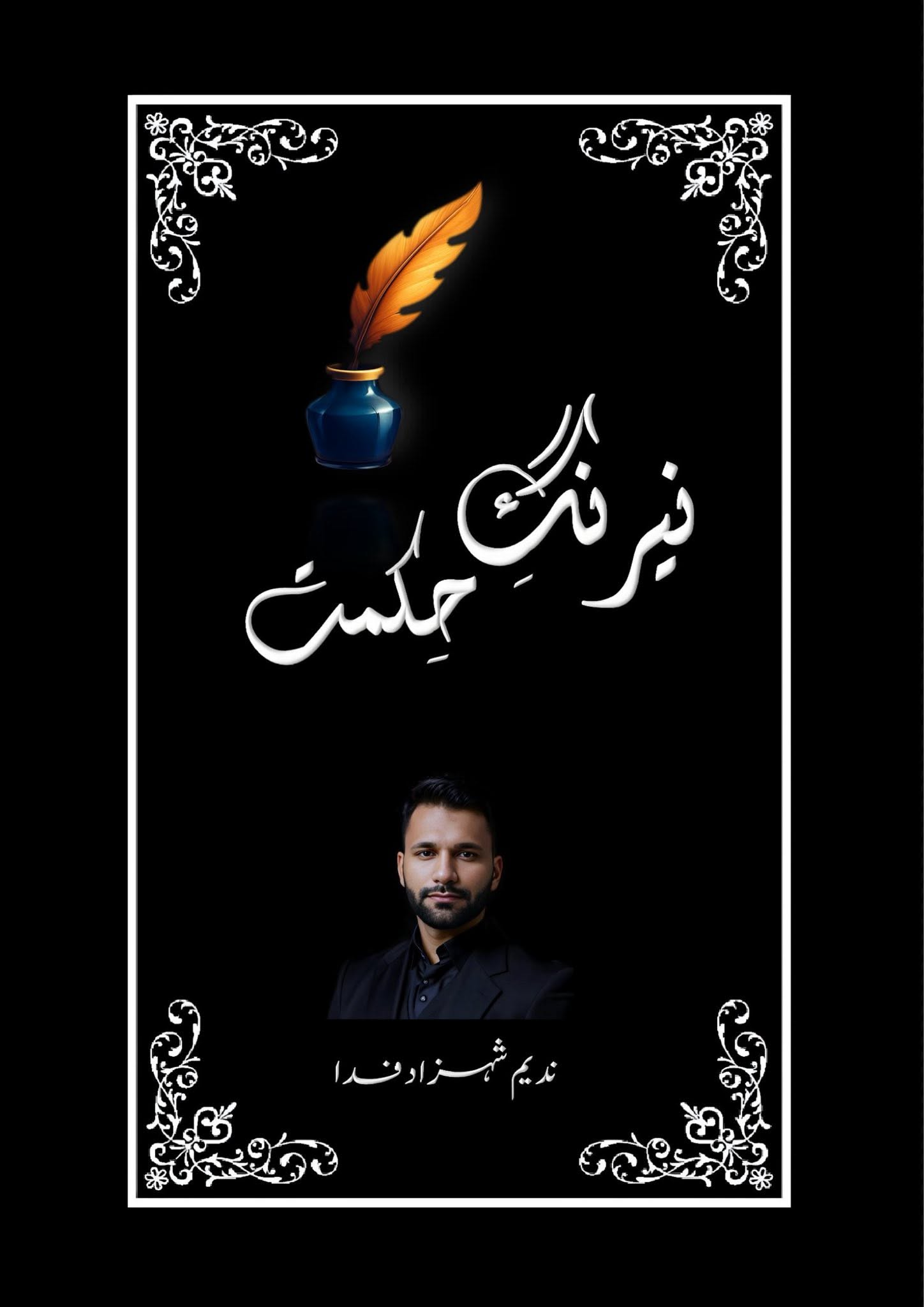
Neerang-e-Hikmat by Nadeem Shahzad Fida
Neerang-e-Hikmat · نیرنگِ حکمت

Neerang-e-Hikmat is my published Urdu work, but in my own mind it is less a collection of answers than a record of questions that refused to remain on the surface. Some questions follow a person quietly for years. They appear in solitude, in loss, in wonder, in prayer, in the strange distance between what the intellect can explain and what the heart continues to seek. The book moves through Islamic reflection, philosophy, spirituality, the mystery of existence, human purpose, love and the relationship between the created being and the Creator.

The published edition contains more than 170 pages and is listed by PaperCraft Publishers under ISBN 9786277771232. Its themes include the Oneness of Allah, the universe and cosmological wonder, the purpose of human creation, true and worldly love, and reflective poetry. I wanted the writing to travel between intellect and feeling without forcing either to surrender, because some truths are approached by reason, some are felt before they are explained, and the most meaningful reflections often ask both to sit at the same table.

Writing it demanded a very different patience from software. Code usually tells you when something has broken. Language can deceive more elegantly. A paragraph may be grammatically correct and still fail the truth of what you meant; a poem may carry beautiful words and remain spiritually weightless. I learned to distrust the first convenient sentence, to return to an idea after the excitement of writing had passed, and to keep searching until the words felt less like decoration and more like witness.

For me, writing completes the same circle as the rest of my work. Chess asks what follows from a move. Photography asks what deserves attention. Software asks what can be made clearer. Writing turns inward and asks what is worth preserving after the moment itself has disappeared. Perhaps that is why I keep returning to it: words can become a small vessel for thoughts, questions and feelings that time would otherwise carry away.

Nadeem Shahzad Fida Urdu ISBN 9786277771232 170+ Pages Philosophy & Spirituality

I rarely begin with technology. I begin with a problem that refuses to leave me alone.

Some projects are financial, some communal and some simply practical. Their common beginning is usually the same: a real inconvenience remains unresolved long enough to become a question, and the question eventually becomes something I feel compelled to build.
Triplem VIP
Triplem VIP
triplem.vip

My flagship platform, a private accounting and finance workspace for individuals, merchants and business operators. Triplem VIP connects expense wallets, loans, inventory, invoices, receipts, assets, installments, notes, multi-currency records, reports and browser-controlled Bitcoin tools in one structured workspace.

Its design is shaped by real accounts and operations experience: searchable history, clear balances, isolated accounts, professional PDF records and practical visibility without spreadsheet chaos.

Accounting Finance Bitcoin Multi-currency PDF Export Privacy-first
Khawrai Blood Group Directory
triplem.vip/KhawraiUnity

A community blood-donor directory for the people of Khawrai, searchable by blood group, Mohallah, mobile number, and location (local, within Pakistan, or abroad). The platform supports all 8 blood groups and includes a blood compatibility guide, admin-verified records, and mobile apps for both Android and iOS.

This project was born from a simple conviction: in a medical emergency, seconds matter, and your community should be one search away.

Community Healthcare Blood Donors Khawrai Android & iOS
TikTok Video Downloader
triplem.vip/tt

A clean, fast, and free TikTok video downloader without watermark. No sign-up. No ads. No clutter. Just paste a link and get the video, because a tool that works is more valuable than one that looks impressive.

Built under the Triplem VIP umbrella and hosted at triplem.vip/tt, this utility serves thousands of users who simply need a no-nonsense download solution.

TikTok Downloader No Watermark Free Tool
Khawrai Falahi Committee UAE
livenews.live/KFC

The official digital platform of the Khawrai Falahi Committee UAE, established December 2016 to support Khawrai residents in the Emirates during emergencies. The platform provides secure member login, a leadership dashboard, a member database, alerts, galleries, a chat portal, and a community constitution in two languages.

Built to ensure that Khawrai's sons and daughters in the UAE are never alone in a crisis.

Community Portal UAE Member Database Emergency Support Bilingual
LiveNews Global Network
livenews.live

A digital news platform carrying the public credit Nadeem Shahzad Fida · Developer & Founder. It organizes global coverage across world affairs, politics, business, technology, economy and energy while also linking to community and media projects.

News PlatformFounderWeb DevelopmentPublishing

Distance changed the map, but Khawrai never became distant in meaning.

Living in the UAE did not weaken the idea of community. It made distance more visible, and technology became one of the ways I could turn that distance from a separation into a bridge.

I come from Khawrai in District Nowshera, and no matter how far professional life travels, a part of one's understanding of responsibility is formed by the place that first taught the meaning of neighbour, family and belonging. Community projects matter to me because they test whether technology can remain practical and humane. A donor directory has value only if a worried family can find the right blood group quickly. A welfare platform matters only if people can reach one another when help is needed. The real measure is not the sophistication of the code; it is whether someone, somewhere on the other side of the screen, feels a little less alone.

Blood Donor Network

The Khawrai Blood Group Directory gathers donor information into one searchable place, allowing people to look by blood group, Mohallah and location. I built it around a simple reality: emergencies do not wait for a family to search through old messages, forgotten contacts and scattered lists. In such moments, clarity is not convenience; it can become a form of service.

Open Directory
Khawrai Falahi Committee UAE

My connection with Khawrai Falahi Committee UAE has included media and public communication. The digital platform supports the wider welfare effort by giving the expatriate community a structured place for information, membership and emergency-oriented coordination, so that distance does not have to mean disconnection when a shared responsibility calls.

Visit Platform
Mobile-First Access

I try to design community tools for the device people already have in their hands. Mobile-first access is not a fashionable design choice here; it is part of respecting the reality of the person who may need the service quickly, away from a desk, perhaps at a moment when patience and time are already in short supply.

Different pursuits, yet the same questions keep returning in different clothes.

I do not think of these as a list of skills. They are recurring patterns of attention, questions that follow me from work to writing, from a chessboard to a camera frame, and from a problem to the thing I eventually build.
01

Can this be clearer?

Clarity is probably the strongest bridge between my teaching background and my product work. Whether I am explaining a mathematical idea, reviewing an operational process or designing a finance screen, I keep asking what can be removed, renamed, regrouped or made more visible without losing substance. Confusion often comes not from lack of information, but from too much of it standing in the wrong place.

02

What is the real consequence?

Numbers are never merely numbers. A balance influences a decision, a delay reaches another person, and a chess move changes the position that follows. I tend to look for the chain beneath the event, because actions rarely end where they appear to end. Every consequence has a history, and every decision quietly prepares a future.

03

What are we not seeing?

Photography trained my attention; operations trained my peripheral vision. Both taught me that the most obvious subject is not always the most important one. Sometimes meaning lives near the edge of the frame, and sometimes the true cause of a problem sits outside the area everyone has agreed to examine.

04

Does the user retain control?

I prefer tools that respect the person using them. That means understandable records, exportable data, privacy-conscious design and fewer situations in which the system becomes more informed than the person it is supposed to serve. Technology should extend human agency, not quietly replace it.

05

Is it useful after the excitement fades?

I enjoy new technology, but novelty and usefulness are not the same thing. The products and community tools I care about are the ones that still make sense on an ordinary Tuesday, long after the excitement of something new has disappeared. When a tool continues to reduce effort, preserve dignity or bring clarity after nobody is impressed by its technology anymore, design has crossed into service.

A few other windows opening onto the same journey.

If you want the formal chess record, the published book listing, photographs or professional profile, these public links carry different fragments of the same story beyond this page.

The ideas that keep returning, even when the work changes.

They appear in different forms through work, chess, photography and writing. I do not hold them as rigid rules; they are more like inward questions that slow the hand just enough to make the next decision conscious.

"Every meaningful structure begins when the unnecessary falls quiet and one honest decision remains about what truly matters."

On Clarity

"Patience is not emptiness. It is the discipline of remaining still long enough for impulse to pass and the right action to become visible."

On Patience

"A community does not remain behind when you travel. It travels within your sense of responsibility, and what you build for it should carry the same care you would ask for yourself."

On Community

"The camera and the chessboard share a quiet honesty: both reveal what your attention chooses, what your patience misses and what remains when pretence has nowhere to hide."

On Authenticity

"Privacy is a form of dignity. Some boundaries should remain in the hands of the person, not because secrecy is sacred, but because autonomy is."

On Privacy

"The best move is not always the one that shines today. Often it is the quiet move that prepares a position you will be grateful to inhabit much later."

On Strategy

If something in this journey speaks to yours, the conversation can continue here.

For Triplem VIP, professional collaboration, publishing, chess, photography or simply a thoughtful exchange of ideas, these are the public channels through which our paths can meet.